
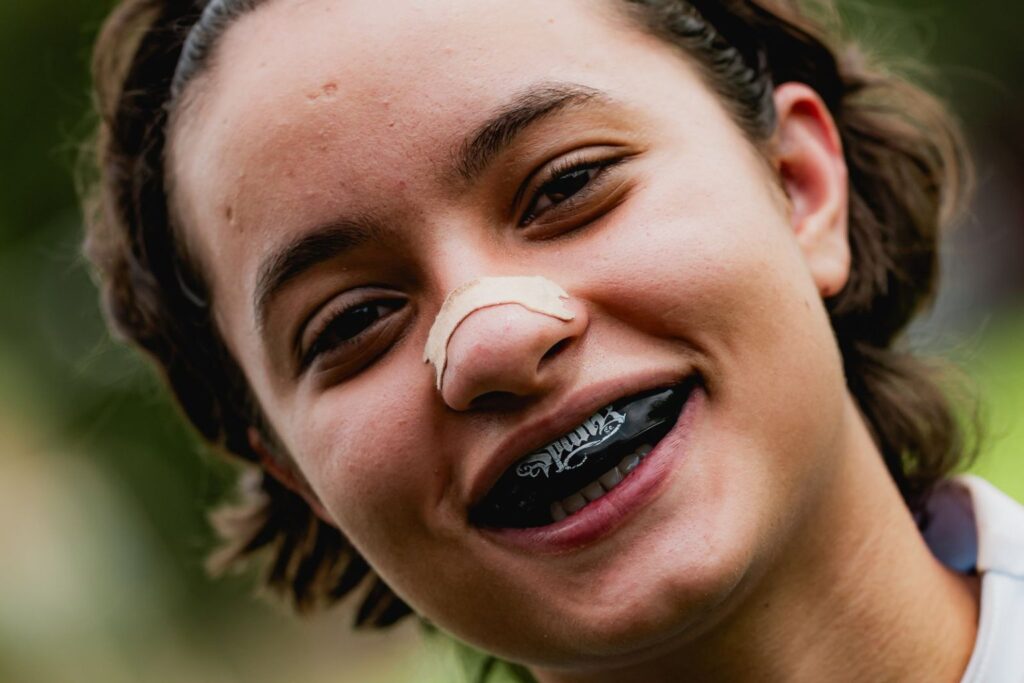
Custom Sports Mouth Guards: Why the Right Fit Matters
An elbow during a basketball rebound. A soccer collision. A fall from a skateboard. A dental injury does not require a professional athlete or a particularly rough game.
A sports mouth guard provides cushioning between your teeth and an incoming impact. But choosing one involves more than picking a color or grabbing the first package at a sporting goods store. Its fit affects whether it stays in position—and whether you can comfortably keep it in your mouth throughout practice.
A custom-made sports mouth guard is designed around your individual teeth. For athletes who struggle with loose, bulky, or uncomfortable guards, that difference deserves attention.
What Does a Sports Mouth Guard Actually Do?
A mouth guard helps absorb and distribute forces from a blow to the mouth. It also separates the teeth from surrounding soft tissues, helping reduce cuts and bruising inside the lips and cheeks.
That cushioning matters when a ball, another player, or the ground makes contact with your face. Instead of the teeth and soft tissues receiving the full impact directly, the protective material helps reduce the force transmitted to them. No guard can prevent every injury, but reducing the risk is the reason to wear one. (Source: Research on how mouth guards protect against injury)
The evidence supports their use. A 2019 systematic review examined 26 studies involving sports mouth guards. In the studies that directly tracked injuries over time, people who did not wear mouth guards had approximately 2.3 times the risk of mouth and facial injury compared with those who wore them.
The studies varied in quality, sport, and mouth guard type. That number supports wearing a mouth guard; it does not prove that a custom guard is 2.3 times better than a store-bought one. (Source: 2019 systematic review and meta-analysis)
How Is a Custom Mouth Guard Different?
There are three main types of sports mouth guards.
Stock mouth guards come in predetermined sizes and are worn without molding them to your teeth. Their generic shape can make them bulky or loose. Some require the wearer to keep the jaws closed to hold them in place.
Boil-and-bite mouth guards soften in hot water and are then shaped around the teeth. They can provide useful protection when fitted correctly, although the result depends on following the manufacturer’s instructions and achieving a suitable fit.
Custom-made mouth guards are fabricated for one person using an impression or model of that person’s teeth. A dental professional can assess their fit, coverage, and retention.
Custom guards generally cost more and require dental appointments. Their main practical advantage is individualized fit: the design can accommodate the person’s mouth instead of asking the person to adapt to a generic shape. The American Dental Association also notes that other mouth guard types can be effective when properly made and consistently worn. (Source: ADA overview of mouth guard types)

Why Fit Matters During a Game
Think about trying to call to a teammate while holding a loose mouth guard in place with your teeth. Or repeatedly removing a bulky guard because it feels uncomfortable during drills.
These are practical reasons to have a guard’s fit checked. Protective equipment only helps while it is being worn correctly.
A study of young male rugby players found that athletes using standardized custom-made guards reported fewer breathing complaints and wore their guards more frequently. More frequent use was associated with fewer mouth and facial injuries. Because this was a questionnaire study in a particular group of athletes, it cannot predict every player’s experience, but it illustrates why comfort matters. (Source: Rugby-player mouth guard study)
Tell your dentist if you have to clench continuously to retain your guard, if it rubs against your gums, or if you regularly remove it to speak or breathe comfortably. Those observations are more useful than simply saying, “I don’t like wearing it.”
Who Should Wear a Sports Mouth Guard?
Mouth protection is relevant wherever a collision, fall, or fast-moving object could strike the face. Football and hockey are obvious examples, but basketball, soccer, baseball, skateboarding, and gymnastics can also expose teeth to injury.
The question is not just whether a league requires a guard. It is whether the activity carries a meaningful risk of impact to the mouth.
The American Academy of Pediatric Dentistry recommends properly fitted mouth guards for organized sports with a risk of mouth and facial injury. It also encourages dentists to prescribe, make, or arrange mouth guard protection for patients at increased risk. (Source: AAPD policy on sports-related injuries)
Include the guard in your practice routine as well as your game-day equipment. Contact drills, scrimmages, and casual play still involve the movements that can cause an injury.
What If Your Child Has Braces?
Braces make choosing the right protection particularly important. During an impact, brackets can press against the inside of the lips and cheeks. A suitable mouth guard provides a barrier between them.
Ask the orthodontist or dentist which design is appropriate. Teeth move during orthodontic treatment, so fit needs to be reassessed. Depending on the appliances present, protection for the lower teeth may also be recommended. (Source: ADA guidance for athletes with braces)
Bring the current guard to orthodontic or dental visits, especially if it suddenly feels tighter, no longer seats fully, or has become difficult to remove.
Will a Mouth Guard Affect Athletic Performance?
Athletes sometimes worry that a guard will interfere with their performance. A systematic review of 15 trials involving 312 athletes found that custom-made mouth guards generally did not impair athletic performance.
The researchers also identified limitations in the studies, so this should not be turned into a promise that a custom guard improves strength, endurance, or speed. Its purpose is protection, with a fit that allows the athlete to participate comfortably. (Source: Review of mouth guards and athletic performance)
Does a Sports Mouth Guard Prevent Concussions?
A mouth guard should not be presented as a guarantee against concussion. The 2019 review cited above did not establish a statistically clear reduction in concussion risk across the studies it analyzed.
Wear the appropriate helmet and other protective equipment, follow the sport’s safety rules, and take possible concussion symptoms seriously—even if a mouth guard was being worn when the impact occurred. Dental protection and evaluation of a head injury are separate concerns.
How to Care for Your Guard—and When to Replace It
After use, rinse the guard and clean it according to the instructions provided. Keep it in a sturdy, ventilated case so it can dry. Avoid hot water, direct sunlight, and leaving it in a hot vehicle, where heat may distort its shape.
Check for cracks, thinning, rough edges, and changes in fit. Children and teenagers may need replacements more often as their mouths develop. A guard that fitted last season may no longer fit after new teeth erupt or orthodontic treatment progresses. (Source: ADA care and replacement guidance)
A useful habit is to inspect the guard when checking the rest of your equipment before a new season. Bring it to your dental appointment rather than guessing whether it still fits properly.
Talk With Reynolda Smiles About Sports Protection
If you or your child plays sports, mention the activity at your next visit to Reynolda Smiles. Explain which position you play, how often you practice, whether you wear braces, and what problems you have experienced with previous mouth guards.
Ask whether a custom sports guard would be appropriate and what the fitting process, cost, and replacement needs would involve.
Reynolda Smiles is located at 3244 Reynolda Road in Winston-Salem. Call 336-922-2542 to ask about sports mouth guard options or request a dental appointment.
A guard that fits securely and is worn consistently belongs in your sports bag alongside the rest of your protective equipment.
This article is for general educational purposes and does not replace an examination, diagnosis, or individualized dental advice. Ask your dentist which type of mouth guard is appropriate for you or your child.